Project image: AI generated
Law Law Land
Why we do it
Laws shape our everyday lives – but they are often complex, difficult to understand, and far removed from the needs of their users. Until now, the legislative process has focused primarily on legal precision, without involving those who will later implement the laws or be affected by them. The result: laws that are correct in content but not user-friendly in design.
We are convinced that access to law should be simple, clear, and barrier-free. To achieve this, new ways of thinking are needed – interdisciplinary, design-oriented, and practical. Our goal is to provide impetus and actively participate in the further development of the legislative process.
The current federal government also emphasizes the importance of modern, user-oriented law in its 2025 coalition agreement. It states:
“Our law must be understandable and digitally compatible. For us, content comes first, then the paragraphs. We will carry out practical checks early on in the legislative process and involve those affected as well as enforcement experts from the federal, state, and local governments …”
(Coalition Agreement 2025)
That is what drives us – and we want to use specific projects to show how legal design can help make law more understandable, modern, and user-oriented.
How we do it
To make existing law more accessible and future laws more user-friendly, we will be implementing two interrelated formats in 2026:
Format 1 | Law Law Labs
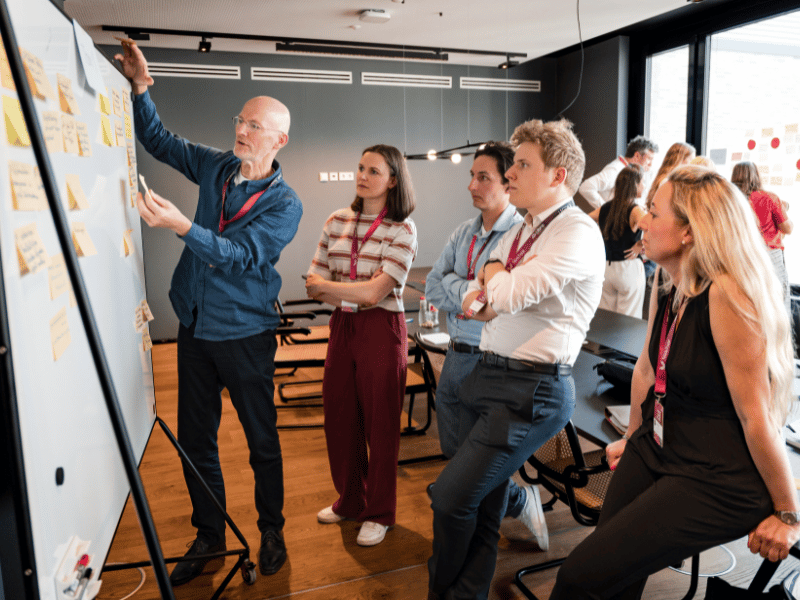
May 2026 will see the launch of Law Law Labs – an online Legal Design Sprint for students who are passionate about shaping the future of legal. Together with experts, participants will explore innovative approaches to legal design and develop creative ideas on how legislative processes can be made more user-centered in the future.
Format 2 | Law Law Land
This will be followed in September 2026 by the Law Law Land Hackathon in Berlin. Here, experienced professionals from ministries, politics, and law will meet creative minds from design and technology. Building on the results of Law Law Labs, concrete solutions will be developed to improve the comprehensibility and accessibility of law in practice.
With both formats, we create spaces for collaboration and innovation—bringing together technical expertise, fresh ideas, legal designers, users, and legal tech specialists.
Our goal: to rethink law—making it clear, understandable, and user-centered.